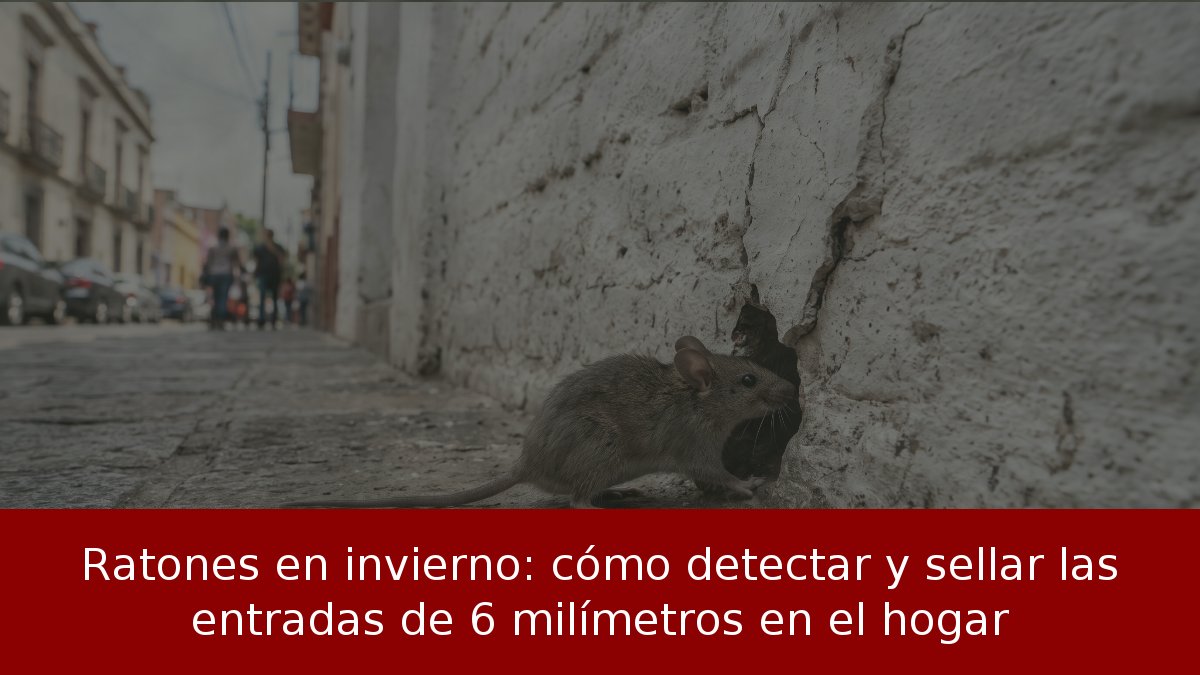
When temperatures drop, mice face a double threat: their bodies lose heat quickly and food and water become scarce outdoors. They therefore seek shelter in closed, dry, warm spaces where they can survive and reproduce. Homes offer exactly those conditions, so during winter the likelihood of these animals entering without residents noticing rises.
- Tiny gaps: a mouse can slip through an opening of about 6 millimeters, roughly the thickness of a pencil.
- Critical areas: cracks in walls, joints between foundations and the floor, spaces under doors and windows, and holes around cables and pipes.
- Effective sealing: use steel wool, metal mesh, sheet metal or cement, since rodents gnaw expanding foam, wood and some plastics.
- Warning signs: droppings, chewed packaging, nests of paper or fabric, tooth marks and persistent odors.
Why winter multiplies the risk
Houses provide constant warmth, access to food —crumbs, grains, pet food or garbage— and hiding places such as storage rooms, kitchens, crawl spaces, walls and the back of appliances. That combination makes the winter season the period of greatest rodent activity inside homes.
Pest experts note that a large crack is not needed for a mouse to get in. An opening of around 6 millimeters is enough, so cracks, doors, windows, pipes, drains or foundations become viable entry points.
Where to check and how to seal
The recommendation is to inspect the home outside and inside, paying special attention to cracks, joints and areas where utilities pass, according to information from the Centers for Disease Control and Prevention (CDC) on preventing an infestation during winter.
Check the joints between foundations and the floor, cracks in walls, spaces under doors and windows, as well as holes around cables, water, gas and drainage pipes, air conditioning and internet connections. Also verify attic vents, basements, drains, chimneys, eaves and the area behind appliances or cabinets.
For small holes, steel wool or copper mesh packed and sealed with silicone or sealant is usually sufficient. For larger openings, heavy-duty metal mesh, sheet metal, cement or wire cloth is recommended, especially around pipes and ducts. Soft materials alone may fail because rodents gnaw expanding foam, wood and certain plastics.
On doors that do not close flush with the floor, install door sweeps or metal brush strips; if light is visible underneath or around, there is a gap that must be corrected. Installing or repairing screens and grilles on vents, drains and chimneys is also useful.
Signs inside the home and complementary measures
Indoors, alerts include droppings near food, under the sink or in drawers; chewed packaging; accumulations of paper, fabric or dry vegetation for nests; tooth marks on walls or floors, and persistent odors in closed spaces.
Sealing is not enough. Store food, kibble and seeds in glass, metal or thick plastic containers with lids; clean crumbs and spills; do not leave pet food or water bowls out overnight, and keep garbage in closed bins. Outdoors, remove leaves, weeds, boxes and piled wood that can serve as hiding places, keep the perimeter clear and recheck after rain, repairs or temperature changes, when new cracks may open.
If a rodent is detected, health authorities recommend not handling it directly and keeping children and pets away from the area where the animal, its droppings, urine or nest materials were seen. To clean droppings, urine or nests, do not sweep or vacuum, as contaminated particles become airborne: use rubber or plastic gloves, spray with disinfectant or a chlorine solution, wait at least five minutes, remove with paper towels, disinfect the surface and wash your hands.
Mechanical traps should be placed against walls, behind furniture, in the kitchen, pantry, garage or where signs of activity exist, and checked daily out of reach of children and pets. If the rodent is caught in a trap, the CDC advises using gloves, double-bagging it before disposal and disinfecting the trap before reuse.
It is time to call pest control if there are rodents in several rooms, activity inside walls or ceilings, recurring droppings, damage to cables or a visible infestation. Poisons should be used only by following the label precisely, as they pose risks to children, pets and wildlife. With the winter season underway, timely inspection and sealing make the difference between an isolated nuisance and a costly infestation.