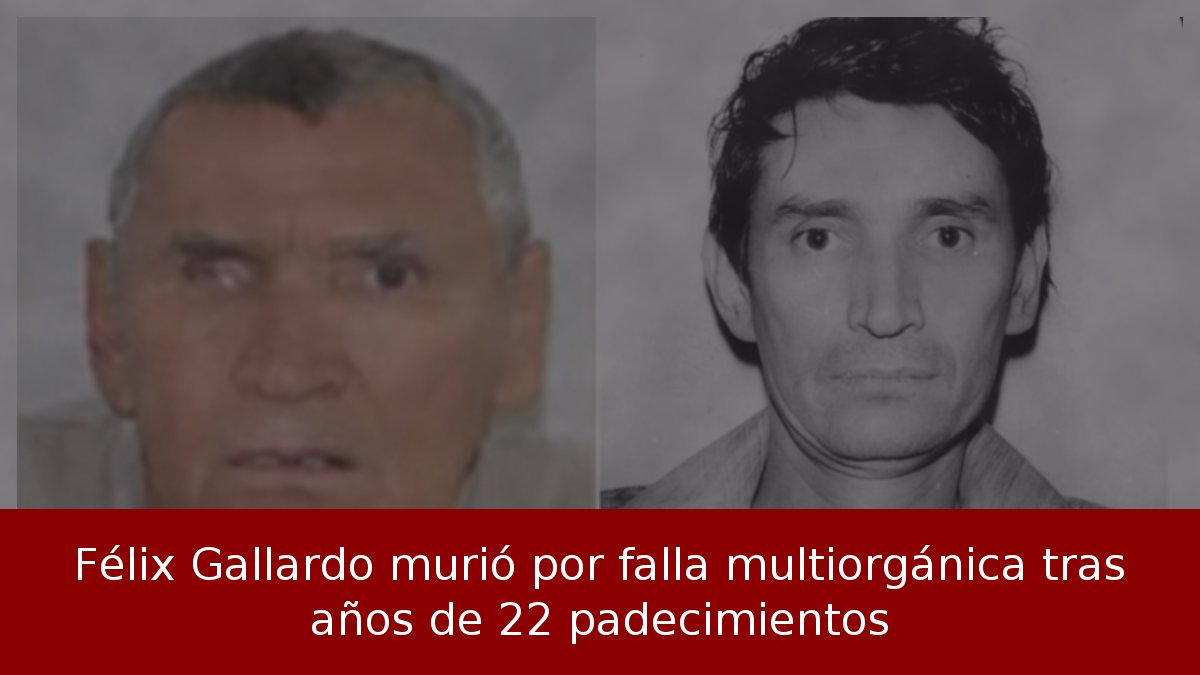
Miguel Ángel Félix Gallardo, the founder of the Guadalajara Cartel, died on Sunday, November 15, 2026, at the age of 80 in Guadalajara, after being hospitalized since November 13. Medical staff attributed the death to multiple organ failure, according to information from the Jalisco Security Secretariat.
- Hospitalization: he was admitted with low oxygenation, disorientation, and altered consciousness.
- Cause of death: multiple organ failure, according to the Jalisco Security Secretariat.
- Clinical picture: in 2022 it was reported that he suffered from 22 illnesses and required permanent medical care.
- House arrest: a judge granted it in 2022, but appeals and pending proceedings prevented its execution.
What is multiple organ failure
According to information from the Cleveland Clinic, multiple organ failure, also called multiple organ dysfunction syndrome, occurs when two or more essential organs or systems stop functioning sufficiently to keep the person alive without intensive medical support. It can involve the lungs, heart, kidneys, liver, brain, and the coagulation system.
The central mechanism combines widespread inflammation, alterations in coagulation, and reduced blood circulation. As organs receive less oxygen and nutrients, their cells are damaged, and the deterioration of one organ can worsen that of the others. It does not necessarily mean that all organs fail at the same time: it can begin with respiratory failure and low oxygenation, then add kidney damage, very low blood pressure, altered consciousness, or the liver's inability to process substances.
The most frequent causes are sepsis, shock, severe trauma, major hemorrhage, extensive burns, major surgery, heart attack, severe pancreatitis, or pulmonary embolism. It is unknown when the multiple organ failure that caused Félix Gallardo's death began, although information about his notable physical deterioration had been public since at least 2008 and worsened during his years in prison.
The 22 reported ailments
The most detailed account was released by the then head of the SSPC, Rosa Icela Rodríguez, on September 15, 2022, when she reported that Félix Gallardo had 22 ailments and required permanent medical care, with second- and third-level specialists.
The reported problems included deafness in the left ear and low hearing in the right; atrophy of the right eyeball and glaucoma in the left eye, with loss of vision in one eye over time; facial carcinoma; disc hernia and mobility problems; benign prostatic hypertrophy; chronic vertigo; esophagitis and a history of digestive disorders such as chronic gastritis, hiatal hernia, and constipation; chronic anxiety and depression; high blood pressure; diabetes mellitus; latent pulmonary tuberculosis; and pneumonia acquired in prison, followed by severe respiratory ailments.
In a 2021 interview, Félix Gallardo stated that he had been operated on for eight hernias, that he suffered from severe pneumonia, used oxygen, had lost sensation in parts of his body, and could no longer walk. Those statements describe his perception of the illness; the medical list released by the SSPC in 2022 is the most complete public reference on his diagnoses.
The legal battle for house arrest
His defense used that clinical picture to request house arrest. In August 2022, the medical area of the Jalisco Sentenced Persons Commissary recommended home confinement because he required care that, according to the report, the prison could not sufficiently provide. A judge granted the benefit that year, but its execution was halted by appeals and pending proceedings.
Félix Gallardo's death symbolizes the close of the generation that professionalized and centralized modern Mexican drug trafficking during the 1970s and 1980s. His organization not only controlled marijuana and heroin routes: it also articulated the flow of South American cocaine to the United States and consolidated networks of protection, transport, money laundering, and corruption. That model turned Mexico from a transit country into a central player in the regional business.
His fall, following the kidnapping and murder of DEA agent Enrique “Kiki” Camarena and pilot Alfredo Zavala in 1985, accelerated the dismantling of the Guadalajara Cartel, but did not end the business: it fragmented it. From his networks and former associates emerged or were strengthened groups that would later dominate the criminal map, such as the Sinaloa and Tijuana cartels.
Félix Gallardo died after more than 37 years in custody. His trajectory helps explain how the criminal networks that, transformed and multiplied, continue to define much of Mexico's security crisis were formed. His death does not represent the end of drug trafficking, but the biological and symbolic close of an era: that of the great capos who concentrated power in a relatively unified structure and maintained close ties with political and police elites.