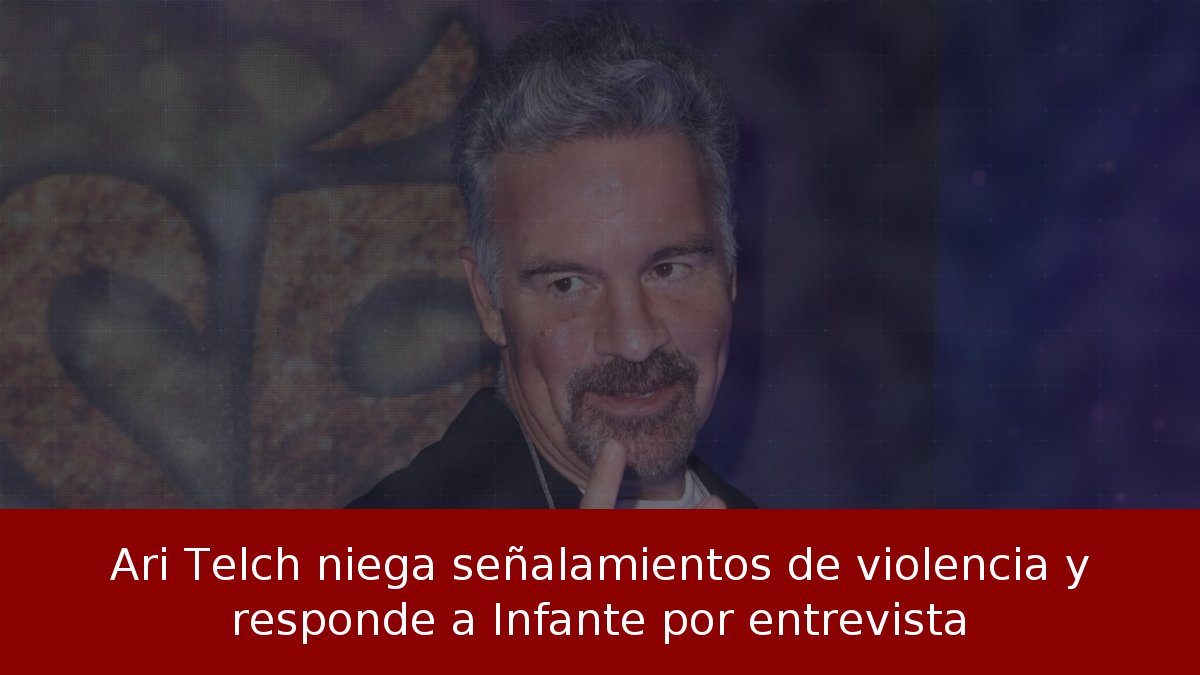
Actor Ari Telch admitted to throwing a cot into a neighbor's garage at the condominium where he lives in Cuernavaca, Morelos, and hit back hard at accusations of alleged violent acts aired on the program De Primera Mano, hosted by Gustavo Adolfo Infante. Through his social media, the performer denied parts of the accounts and described the coverage as a media attack against him.
- Partial admission: Ari Telch acknowledged throwing a cot into a neighbor's garage but said the conflict began when the man removed the cots from common areas.
- Complaint filed: Condominium residents submitted videos and formal complaints to the Morelos State Prosecutor's Office over the actor's alleged violent behavior.
- Media response: Telch lashed out at Gustavo Adolfo Infante and at lawyer Fernando Alonso Murillo Carrillo, whom he called a “pseudoabogado”.
The origin of the conflict in the Cuernavaca private community
The controversy erupted when Fernando Alonso Murillo Carrillo, identified as one of the condominium residents, appeared on television during De Primera Mano and claimed that Telch displays erratic behavior that could endanger neighbors.
The actor responded directly to that interview and labeled the lawyer a “pseudoabogado”.
“Le dio el micrófono a un pseudoabogado que dice que su servidor ofende a los vecinos, que quiere con los niños”, said Ari Telch about Murillo Carrillo's participation in the program.
Telch did not deny the episode that drew the most attention on social media but offered his version of events.
“Aventé un camastro a su garage, sí. Él escondió los camastros. Teníamos siete camastros”, said Ari Telch.
According to his account, the conflict began because Murillo Carrillo allegedly removed the cots from common areas, arguing that the actor might steal them.
“El señor los quitó diciendo que yo me los podría robar. Se llama Fernando Alonso Murillo Carrillo, mejor conocido como ‘Burrillo’”, said Ari Telch.
Attacks on Gustavo Adolfo Infante and the network
Telch aimed much of his response at the host of De Primera Mano and questioned the program's journalistic relevance.
“¿De veras ese es su programa estelar? Este señor que es periodista, ¿periodista de qué? ¿De investigación, periodista de qué, de crítica? No es nada, no es nadie”, said Ari Telch.
The actor also addressed what he said was the televised coverage's effect on the private community's residents.
“La gente tiene tapiadas sus ventanas, tienen miedo”, said Ari Telch.
He added an example of a minor who, according to his version, fears him because of the broadcast accusations.
“La niña se escondió de mí cuando venía aquí a mi casa a jugar, porque el señor los asustó diciendo que yo era peligroso”, said Ari Telch.
Request to the governor and his bipolar diagnosis
Telch publicly asked Morelos Governor Margarita González to intervene and provide him with legal advice regarding the complaint filed with the state Prosecutor's Office. He said he maintains cordial relations with most condominium residents.
“Yo estoy aquí para entregarme, listo, en mi casa. No tengo problemas con un solo inquilino, al contrario, amistades”, said Ari Telch.
The actor again acknowledged the cot episode and asked that unsupported versions not be added.
“¡Sí, cargué el camastro! Dejen de inventar estupideces”, said Ari Telch.
He also mentioned a bipolar disorder diagnosis as context for his recent behavior.
“Sí, los bipolares tenemos depresiones y manías, pero también podemos andar como cualquier perro de la calle”, said Ari Telch.
Two days after his first statement, the actor reappeared on social media, this time on his Facebook profile, where he shared a video with a group of musicians playing marimba while he sang along. In the post's description, he opted for an ironic tone regarding the controversy with the host.
“Acá sigo golpeando viejitas Imagen TV e Infame Gustrago”, wrote the actor, in a direct reference to Gustavo Adolfo Infante and the network that airs his program.
The dispute between Ari Telch and his Cuernavaca neighbors remains open at the Morelos Prosecutor's Office, while the actor insists it is a media campaign rather than a pattern of violence. The case highlights the tension between the private lives of public figures and the exposure they face when a neighborhood conflict escalates to the media.