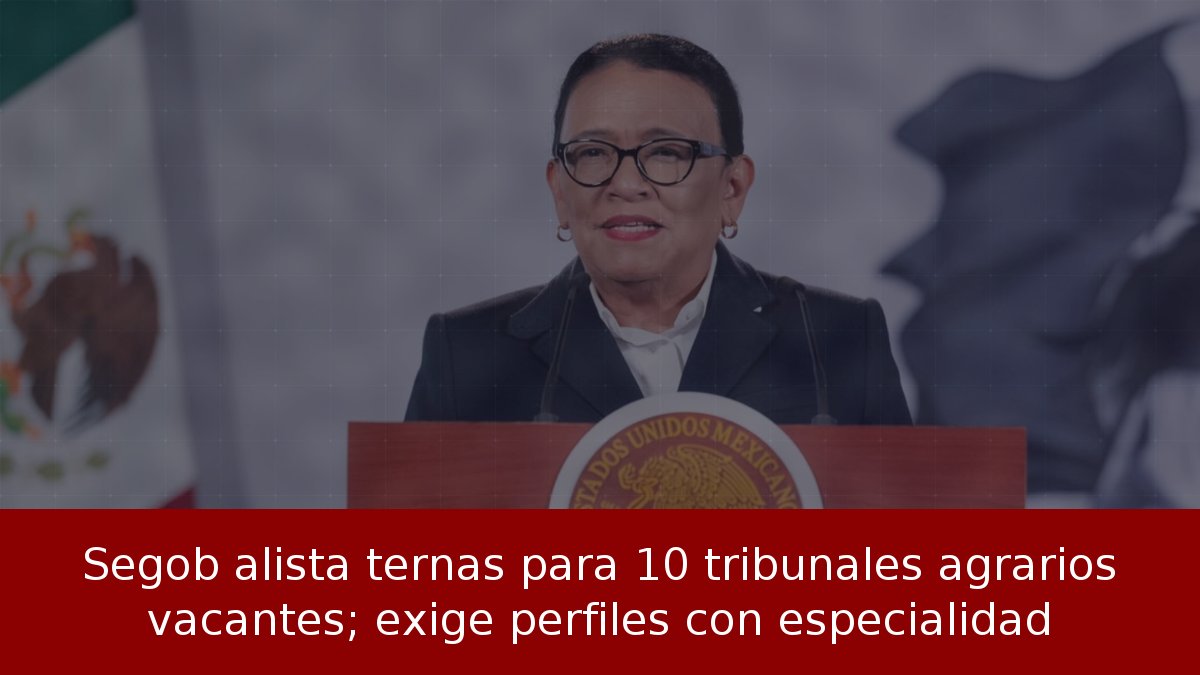
The Ministry of the Interior (Segob) is moving forward with the selection of candidates to head 10 agrarian courts that currently lack a titular, plus another 16 positions whose terms have expired. Rosa Icela Rodríguez, the ministry's head, said that aspirants must demonstrate honesty, a humanistic vocation and specialized knowledge in the field. During Tuesday's morning press conference, she noted that the search and recruitment of résumés was carried out with participation from the Ministry of Agrarian, Territorial and Urban Development (Sedatu).
- Vacant positions: ten agrarian courts have no titular and sixteen other posts have expired terms.
- Profile search: the collection of résumés involved collaboration with Sedatu.
- No date for shortlists: the federal government has not yet set when it will announce the submission of the proposals.
- Requirements: honesty, humanistic vocation and specialty in the subject, according to the secretary.
Final stage in candidate review
Rodríguez explained that the review of candidacies was in the final procedures before the proposals are put up for consideration. She clarified, however, that the federal government still had not defined a date to report on the sending of the shortlists.
The Segob head confirmed that the selection process remained open and that various individuals had submitted their backgrounds to be considered for the appointments to the agrarian courts.
“Sí, efectivamente está en proceso la búsqueda, el reclutamiento, digamos así, de diferentes currículums que han estado pasando por la Secretaría de... por la Sedatu”, responded Rosa Icela Rodríguez.
The question she received referred to the absence of titulares in 10 agrarian courts and the 16 posts with expired terms. It also noted that Mexico's president had anticipated that the shortlists to renew these positions would arrive during the ordinary session period.
No details on aspirants or next steps
The secretary did not specify how many people are participating in the process, whether a final list of aspirants already exists, or what the subsequent stages after the résumé review would be. Nor did she detail before which body the shortlists would be presented or whether the positions would be filled simultaneously.
Rodríguez stated that the federal administration was close to completing the necessary procedures to present the proposals.
“Digamos, casi estamos ya en los últimos trámites”, she declared during her response.
The official added that the names would still have to go through a final review before being put up for consideration. When asked about the status of efforts to renew the titularities, she said: “Ya estamos avanzando al respecto”.
Required profile and rejection of quotas
The Segob head indicated that the criterion for choosing future titulares would be linked to each aspirant's profile and their knowledge of the matters handled by the agrarian courts.
“El perfil, pues es honestos, con vocación humanista y también, pues que tengan la especialidad, que conozcan el tema”, said Rodríguez.
Regarding the relationship between agrarian law and social property of land, ejidos, agrarian communities and agricultural colonies, the official did not elaborate on academic requirements, minimum experience or evaluation mechanisms for the profiles.
The agrarian courts handle disputes related to ejidal and communal lands, as well as other processes derived from social property. For that reason, the secretary placed specialty in the subject among the criteria for assembling the proposals.
As for whether the positions could be subject to quotas, the Segob head denied that this factor formed part of the federal government's decision and insisted that the selection would be based on each aspirant's background. As of Tuesday, she did not announce a date for learning the shortlists or the identity of those who might fill the vacancies in the agrarian courts.
The delay in filling the titularities of the agrarian courts matters because these bodies resolve disputes over ejidal and communal lands, a delicate area for the Mexican countryside. With the process in its final review phase, the definition of the shortlists and their eventual submission to the Legislature will determine how quickly the federal administration seeks to close a vacancy that has accumulated more than twenty pending positions.