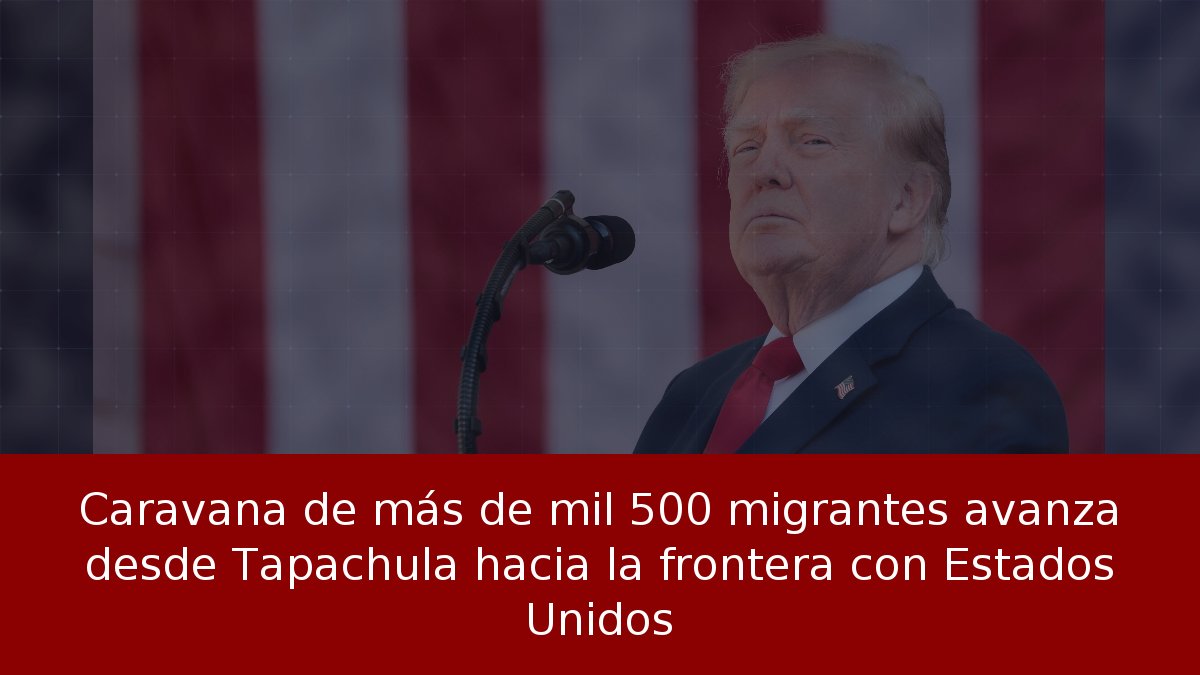
At least 1,500 people, mostly from Central America, are moving north through southern Mexico toward the United States, while President Donald Trump has threatened to raise tariffs on Mexico unless authorities stop the group before it reaches the U.S. southern border. According to Reuters, the caravan set out on Tuesday from Tapachula, near the Guatemalan border.
- Composition and route: the group consists of about 1,500 people, mainly Central Americans, who left Tapachula on Tuesday heading north.
- Tariff threat: Trump linked a tariff increase to Mexico detaining the caravan before it arrives at the border.
- Official response: President Claudia Sheinbaum said the National Migration Institute has informed roughly 10 caravans over the past two years about the difficulties of crossing the Mexico-U.S. border.
Migration context and expectations after the elections
Reuters reported that the group is made up largely of Central Americans seeking better living conditions. After the Democrats' victory in the U.S. midterm elections, migrants hope that when the Congress takes office in January they will have the chance to live and work safely in U.S. territory.
The mobilization comes at a time of bilateral tension. Trump has threatened to increase tariffs on Mexico if authorities do not stop the caravan before it reaches the southern border. The warning adds to a climate of migration pressure that has marked relations between the two governments.
Sheinbaum: the INM assists the caravan and facilitates return
At the morning press conference, President Claudia Sheinbaum acknowledged the extensive experience of the National Migration Institute, which over the past two years has informed about 10 migrant caravans of the difficulties of crossing the Mexico-U.S. border.
“Once those participating in the caravan are informed that it is not possible to enter the United States, then most of them decide to return to their country and we facilitate that return. And while they are in the caravan, we make it easier for them to receive the minimum attention they require for their human rights,” the Mexican leader said.
The head of state clarified that the migrant contingent should be handled from Honduras, since that crossing is where the mobilization originated, but they will likewise be assisted by national migration authorities during their stay in Mexican territory.
Warning about deception of migrants
Sheinbaum also warned about people who deceive migrants and make them believe that migration policy changed after the U.S. election result, which she called false.
“Also, it must be said, sometimes there are people who deceive migrants and tell them that, for example, with the result of the U.S. election the migration policy changed, which is false. So, we inform them and they make their decision. Sometimes one person comes, sometimes families come, and they are helped to stay in good condition. And when they are informed, they make their decision to return,” the head of state said.
An ongoing humanitarian and diplomatic challenge
The caravan's advance once again puts migration at the center of the bilateral agenda. While the Mexican government maintains that most members choose to return to their country of origin after being informed of the restrictions, political pressure from Washington keeps the possibility of tariff measures alive. The outcome of this mobilization will depend on the migration authorities' capacity to manage the flow and on how dialogue between the two countries evolves in the coming weeks.