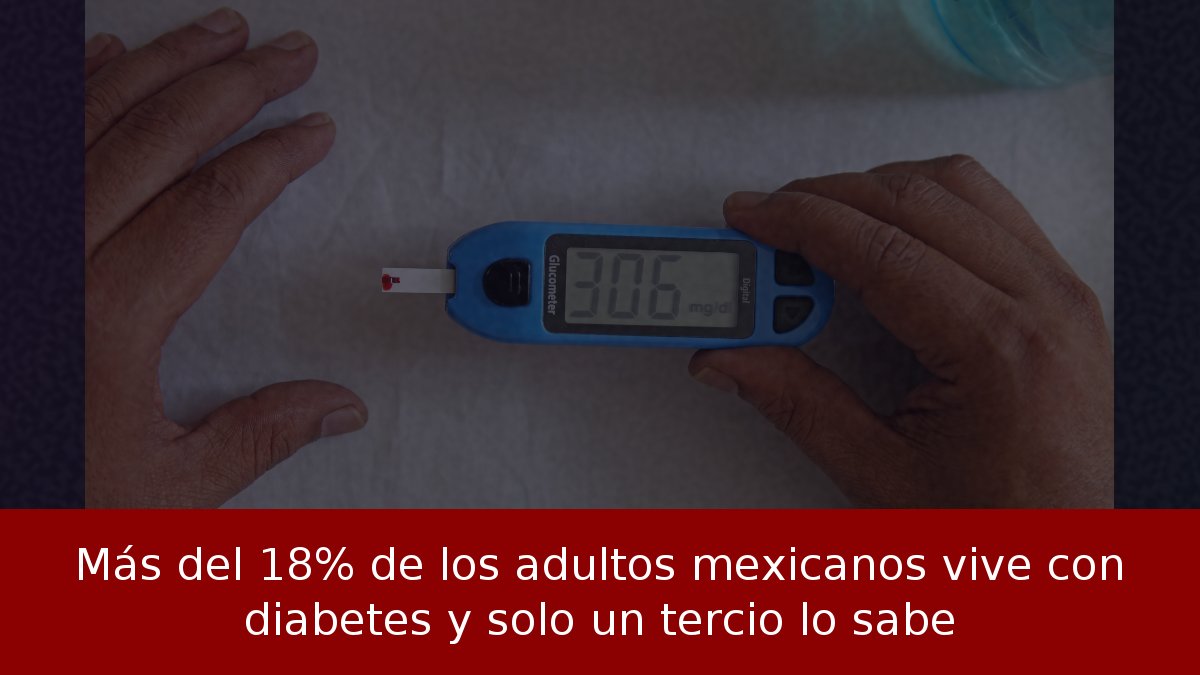
Diabetes remains one of Mexico's most serious public health challenges, affecting both longevity and daily quality of life. Data from the National Institute of Public Health (INSP) show that more than 18 percent of adults in the country live with the condition, yet only about one-third are aware of their diagnosis. That gap between high prevalence and low awareness places enormous strain on the national health system.
- High prevalence: over 18% of Mexican adults have diabetes, according to the INSP.
- Underdiagnosis: just one in three people with the disease knows they have it.
- Global ranking: Mexico ranks eighth worldwide in the number of people with diabetes, per the International Diabetes Federation.
A public health problem with global dimensions
The situation is particularly dangerous because millions may develop serious complications without realizing their blood glucose is elevated. Compounding this, Mexico holds eighth place globally for its patient population, according to the International Diabetes Federation, underscoring the scale of the challenge.
Marking World Diabetes Day, specialists urged stronger prevention efforts built on sustainable changes to diet, physical activity and daily routines, along with medical checkups that can catch metabolic abnormalities early.
Risk factors and the value of early detection
Conditions that raise the likelihood of developing diabetes include overweight, obesity, a sedentary lifestyle, poor diet, family history and aging. Added to these are increasingly common habits: sitting for long stretches, regularly drinking sugary beverages, and having little time to prepare healthy meals or exercise.
Dr. Hugo Palafox, vice president of Science at Immunotec and a specialist in human metabolism, explained that diabetes does not always appear suddenly; in many cases the body goes through extended periods of unhealthy habits that promote insulin resistance. While genetic factors matter, identifying risks and changing daily behaviors can improve metabolic health and lower the chance of complications.
Prevention must be maintained throughout the year and not limited to activities tied to World Diabetes Day, insisted Hugo Palafox.
Five measures to strengthen prevention
As part of his recommendations, Palafox shared five actions that can be incorporated into daily life:
- Maintain a balanced diet. Increase intake of vegetables, whole fruits, legumes, whole grains and fiber-rich foods, while moderating ultra-processed products, sugary drinks and saturated fats.
- Support cellular protection. The body produces glutathione, an antioxidant involved in shielding cells from oxidative stress. The specialist mentioned products such as Immunocal, from Immunotec, which supply precursor proteins for this molecule; however, he clarified that consuming it does not replace a balanced diet nor constitute a treatment for diabetes.
- Prioritize rest. Keeping regular sleep schedules and getting enough rest supports overall well-being and helps maintain healthy routines.
- Watch weight and cardiovascular health. Maintaining a healthy weight, monitoring blood pressure and controlling cholesterol through good nutrition and physical activity addresses several risk factors linked to metabolic diseases.
- Schedule regular medical checkups. Seeing health professionals allows monitoring of glucose levels, identification of abnormalities and timely guidance. Early detection is key to preventing the disease from progressing without supervision.
One of the greatest risks is that diabetes can develop for years without obvious signs, so many people do not know they have it until symptoms or complications appear. When glucose stays high without adequate control, it can cause progressive damage to blood vessels and nerves, leading to cardiovascular disease, kidney damage, vision problems and neuropathies.
Given this outlook, the specialist stressed that knowing risk factors, adopting healthy routines and attending medical checkups are decisions that can make a difference in quality of life. In a country where diabetes is among the top health challenges, strengthening early detection and promoting healthy habits from an early age is essential to reducing the disease's impact.