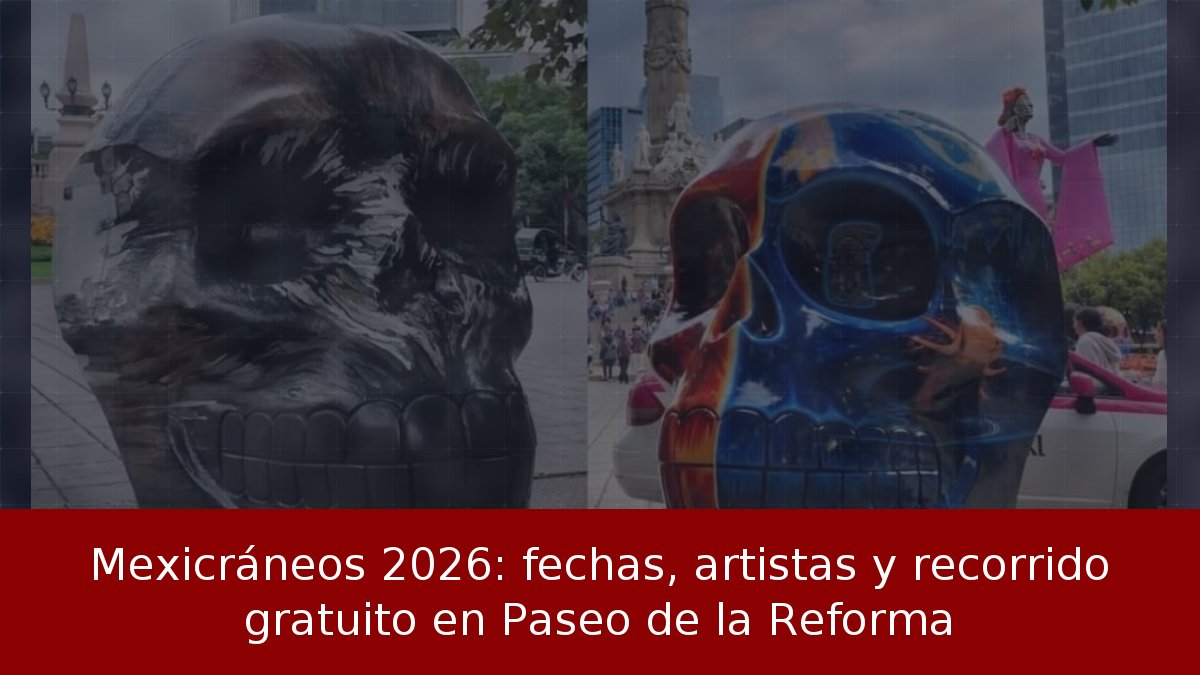
Six large skulls have returned to Paseo de la Reforma for Mexicráneos 2026, an open-air exhibition that remains on view until November 16 during Mexico City's Day of the Dead season. The display, titled Relatos Místicos, uses massive sculptures inspired by Mexican myths, legends, and oral narratives. Because the works are placed along one of the capital's busiest avenues, they invite residents and visitors to walk, observe the artistic interventions, and take photographs. Entry is free.
- Dates and admission: The skulls were installed on Saturday, October 17, and will stay through November 16; no ticket is required.
- Theme: Relatos Místicos is built around legends, myths, and stories handed down across generations, connecting pre-Hispanic cosmogony with colonial-era traditions.
- Artists: Six invited creators—Alejandra Romano, Andrés Ceja, Fredelle, Luis Colomo, Michel Chetto, and Perla G. Crespo—each intervened one skull, focusing on identity, memory, emotions, or cultural roots.
- Nearby attractions: The skulls share the avenue with monumental alebrijes, illuminated Day of the Dead figures, and a cempasúchil flower festival.
Relatos Místicos and its creators
The exhibition takes its name from mystical storytelling. It draws on narratives that belong to Mexico's collective memory, and each piece uses the visual language of the monumental skull to look at those traditions from a different angle. The chosen myths and legends act as starting points for the interventions along the avenue. The six artists have practices centered on identity, memory, emotion, and cultural heritage, which gives every work a distinct character. The broader aim is to bring audiences closer to artistic expression rooted in Mexican traditions through sculptures placed directly in the urban landscape.
- Alejandra Romano is a graphic designer and self-taught painter who has worked as a colorist for independent comics and participated in illustration meetings, conventions, and cultural fairs.
- Andrés Ceja is a Mexican visual artist and graphic designer who, since 2019, has focused on identity, emotions, and feelings, using the face as his central expressive element.
- Fredelle trained at the Academy of San Carlos and at La Esmeralda, the National School of Painting, Sculpture and Engraving; her painting links the figure, abstraction, and background, and she reflects on time and impermanence.
- Luis Colomo is a binational artist who grew up between Mexico and the United States; his experience includes solo and group shows and public art projects in both countries.
- Michel Chetto produces contemporary figurative painting, both on traditional supports and in murals, and his subjects include memory, identity, and human relationships.
- Perla G. Crespo began her professional path in architecture before moving into the visual arts; her work examines Mexican identity and traditions from a contemporary perspective.
A broader corridor of seasonal installations
The Mexicráneos are part of a wider program on Paseo de la Reforma, continuing an annual pattern of transforming the capital's streets for Day of the Dead. On October 17, an exhibition of monumental alebrijes also opened, placed from the Diana Cazadora fountain after the traditional parade. Illuminated figures tied to the Day of the Dead have been installed nearby, including a catrina at the Angel of Independence. Between the Angel and Glorieta del Ahuehuete, a flower festival offers cempasúchil for anyone who wants to buy seasonal blooms.
Because these attractions are concentrated along the same route, a single visit can cover several displays. The skulls are notable for their size and their relationship with the public space, making them a focal point in the weeks before and after the main Day of the Dead celebrations. Since the show runs for nearly a month, there is enough time for residents and tourists to study the designs, photograph the sculptures, and take part in the city's seasonal programming.
Beyond the visual spectacle, the project offers an artistic reading of elements present in Mexican culture. The interventions draw on collective memory, emotion, and shared roots, and they preserve the iconic visual impact of the monumental skulls. Anyone planning to attend should remember that the display on Paseo de la Reforma ends on November 16.