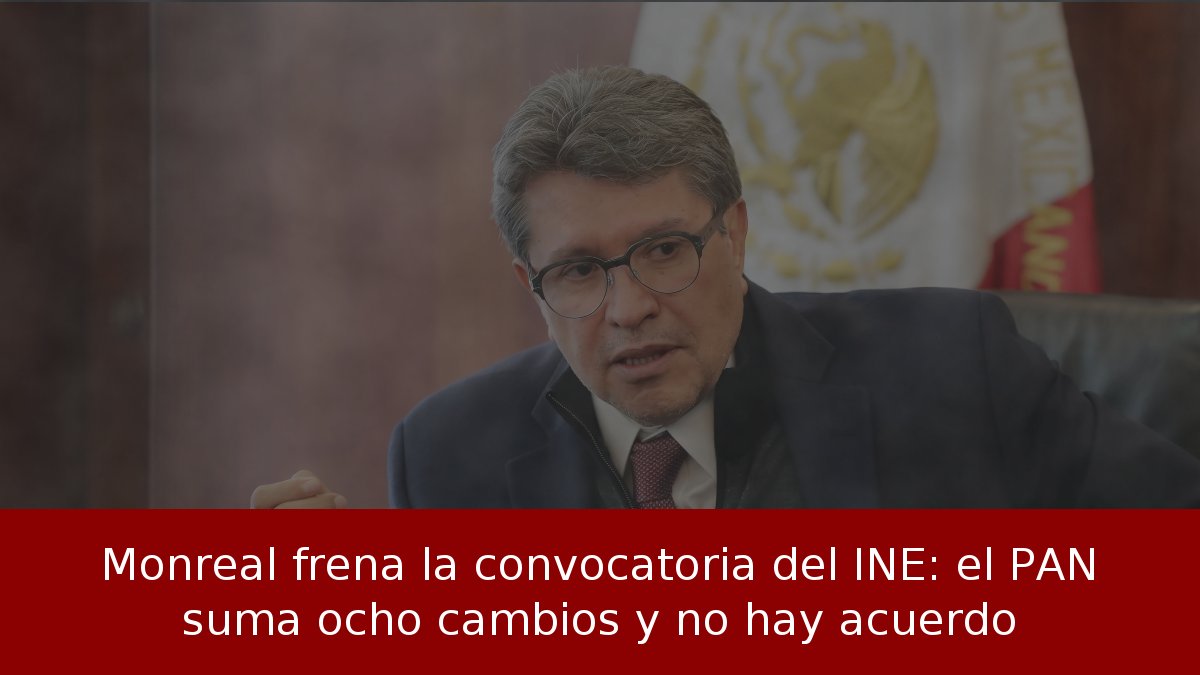
The Cámara de Diputados has yet to approve the call to appoint the next head of the Instituto Nacional Electoral (INE). Ricardo Monreal, who chairs the Junta de Coordinación Política (Jucopo), said lawmakers have not reached an agreement on the document following Guadalupe Taddei's resignation amid corruption scandals.
- No consensus: The Jucopo has not approved the convocatoria to choose the INE presidency.
- The sticking point: PAN lawmakers introduced roughly eight additions or incorporations to the proposed text.
- New timeline: Monreal said publication could slip from November 8 or 9 to November 13 or 14.
- Preferred route: The legislator insists on a consensus appointment rather than a majority vote.
The PAN additions that stalled the agreement
Speaking to reporters, Monreal explained that legislators from the Partido Acción Nacional (PAN) added various proposals to the convocatoria, which blocked its approval and forced the dictamen back into discussion.
“Yo esperaba que ahora sacara el acuerdo, pero el PAN me propone, creo que ocho adiciones o incorporaciones. Algunas son disposiciones constitucionales que serían complejas, difícil. Y voy a dar paso a otros días más para ver si logramos el consenso. Yo quiero el consenso”, afirmó el legislador.
The Morena coordinator in the chamber stressed that naming the new INE council president comes at a delicate moment, as the electoral body faces a crisis stemming from allegations of irregularities in contracts for electoral materials.
Consensus over majority
Monreal made clear his preference for a broad agreement and warned that a divided vote would not be the best outcome for such an appointment.
“A mí me gustaría que saliera por consenso, no por mayoría, porque es tan delicado y tan importante el nombramiento en este momento por la forma de la renuncia y la situación irregular que vive el INE o que vivió el INE, que me parecería pertinente que lográramos el consenso en todo”, subrayó.
The deputy acknowledged that the atmosphere among political forces does not ease understanding and described a climate of widespread distrust.
“No es fácil porque hay una desconfianza total de todos contra todos. Es una desconfianza que surge de este despropósito, de este cúmulo de irregularidades y corrupción que ahora la ciudadanía y los partidos, sobre todo los partidos, tienen sus dudas y están escépticos y plantean cosas que la ley y la constitución no previenen”, puntualizó.
More negotiation time and a possible delay
Given the lack of consensus, Monreal decided to open an additional negotiation period before bringing the convocatoria to the Jucopo. He explained that publication of the document, and therefore the election of the new INE council president, will be delayed by a few weeks compared with the original plan.
“Estábamos pensando sacarlo 8 o 9, se corre al 13 o 14, es lo que sucede, nada más”, aclaró.
The legislator admitted differences among political forces and noted that some PAN positions complicate rapprochement, though he said that strategy does not rule out reaching an understanding.
Monreal detailed that during a meeting with his Morena parliamentary group he received authorization to lead the negotiations, with the goal that the agreement not stem from a divided vote. Although approving the convocatoria by majority is an available path if no pact is reached, he insisted he would prefer to avoid it given the conditions surrounding the renewal of the electoral body.
“Lo de menos sería mañana sacarla como está con mayoría, pero ya surgiría con una discusión y debate previo y creo que no convendría”, planteó.
The deputy maintained that the appointment requires the broadest possible backing and that the process should achieve consensus or even unanimity among Jucopo members. He also warned about the risks of postponing the decision.
“No podemos permitir que se estanque, se obstaculice o quede incompleto el INE”, expresó Monreal, al aceptar que Morena y sus aliados tendrían que recurrir a su mayoría si no surge otra alternativa.
With the calendar on hold, the INE presidency hinges on the banks' ability to clear the PAN additions and build an agreement that gives certainty to the electoral arbiter at a time of intense public scrutiny. The outcome in the coming weeks will shape not only the institute's leadership transition but also perceptions of its autonomy ahead of future electoral processes.